

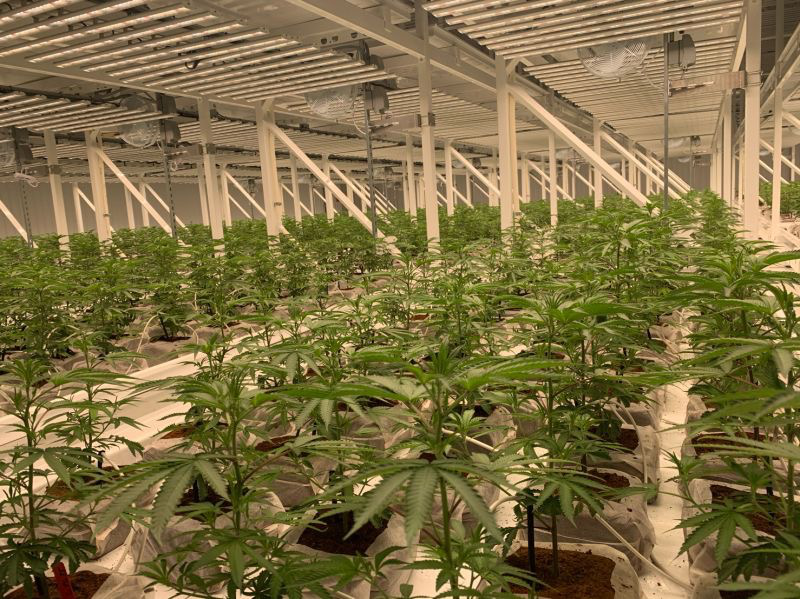
Today I’ll share why I think LEDs have surpassed HPS as the best grow light for home growers (in most situations).
1.) Yields & Bud Quality
I’m going to start with the factor that many home growers care about the most: yields and bud quality.
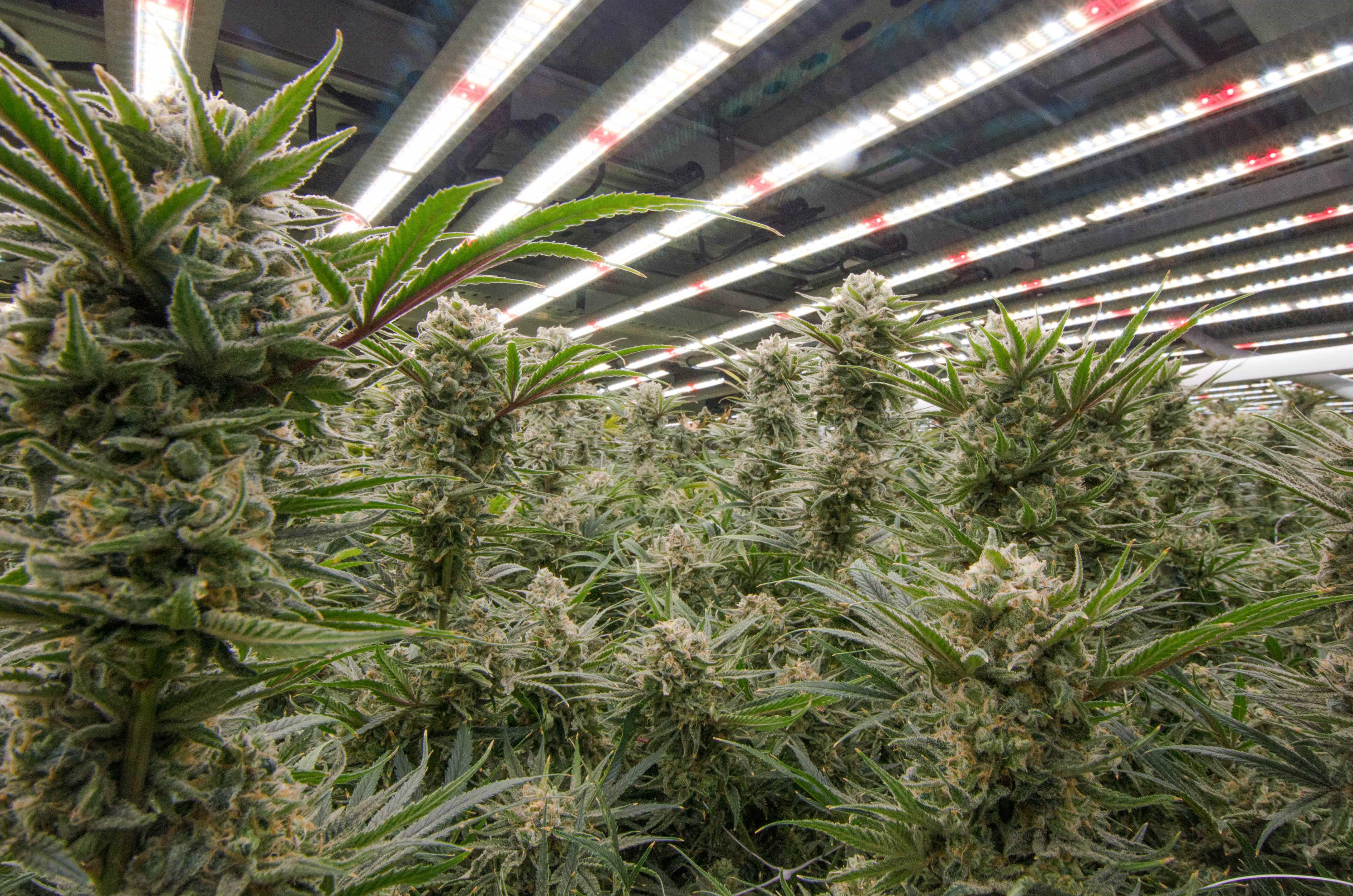
When you consider the amount of electricity used, modern LED grow lights like the HLG 300 and Electric Sky 300 consistently meet or beat HPS yields in side-by-side grow experiments.
On average, the HLG 300 and Electric Sky 300 LEDs beat HPS for yields (watt for watt)
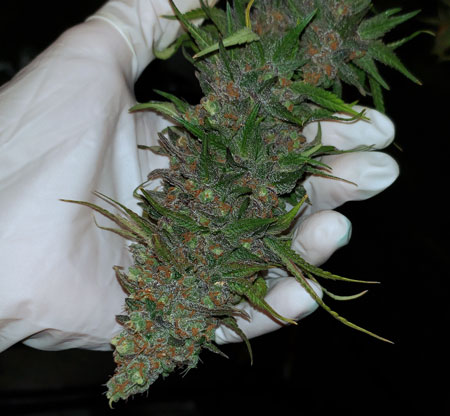
I’ve also found LED bud quality to be the same or better. LEDs often produce more colorful buds and test for higher levels of THC at the lab.
LED bud quality is the same or better (as long as you’re using good LEDs). This bud was grown under the Electric Sky 300 LED
However, I’ve only found this to be true for certain LED models. Older-technology LEDs like ViparSpectra produce overall lower bud quality and yields-per-watt than HPS. If you’re going to go cheap, go HPS. Don’t skimp when buying an LED!
Summary: If you invest in a good LED model, you will be rewarded with exceptional yields and bud quality that match or surpass HPS.
2.) LEDs Run Cooler (Bonus: Plants are More Heat-Resistant)
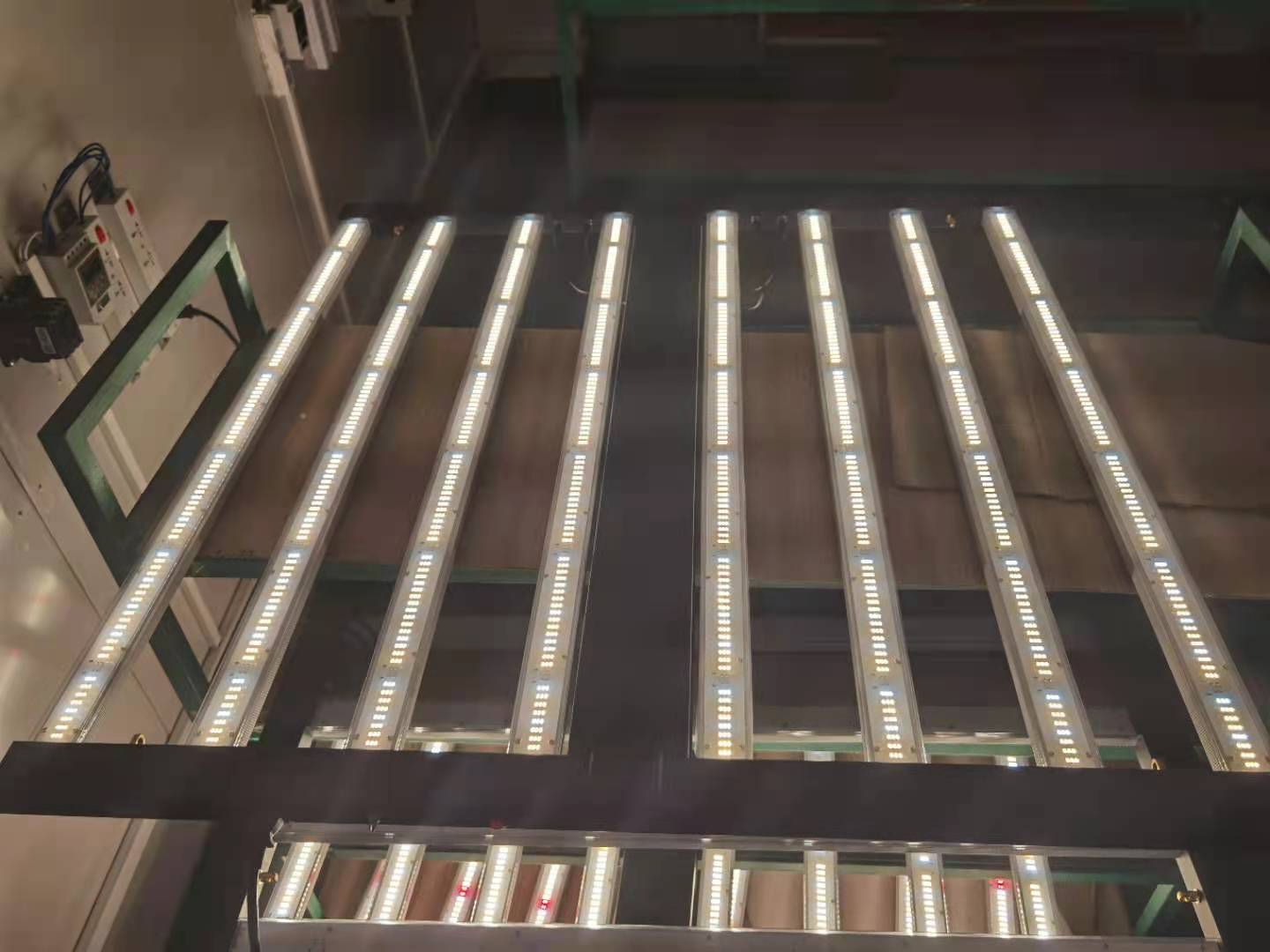
HPS grow lights are known for bringing on the heat. Their bulbs get so hot that even a quick touch can burn you. Typically you need to find some way to vent heat for any HPS over the 250W size. Ultimately, the extreme heat and intense light from an HPS bulb are out of place in the home, especially compared to a cool-running LED panel.
HPS grow lights have earned a reputation for getting hot

Modern LEDs don’t produce much heat per watt, and models under 300W won’t significantly raise the temperature of a room.
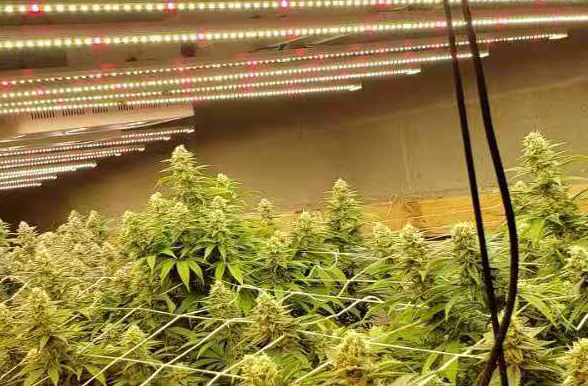
On top of running cooler, LEDs have another advantage for growers that struggle with heat: plants actually prefer warmer temperatures under LEDs. When growing with LEDs, plants grow best around 80°F (26°C), while plants under HPS thrive around 76°F (24°C). That means LEDs produce less heat and plants are more heat-resistant.
Summary: If heat is a challenge, LEDs are hands-down the best choice for cannabis growers.
3.) HPS Companies Stopped Serving Home Growers
If you’ve been going to hydroponic stores over the last decade, you’ve seen the popularity of various grow lights come and go. Although my local hydro store used to sell 150W, 250W, 400W, 600W, and 1000W HPS lights, they now only offer 600W. This is because the 600W size is the most electrically efficient and therefore the most profitable size for commercial growers.
Why is this happening? HPS technology is mature and HPS grow lights are cheap. Most standard HPS models can be found for under $200 and since the technology isn’t changing, customers expect the prices to go down not up. As a result, there just isn’t much profit in selling HPS lights, especially compared to LEDs which can cost $500 or more per light and take a fraction of that cost to build.
Summary: HPS grow light companies aim their products at commercial growers. If you want a grow light that’s suitable for a home environment, LEDs have more (and better) options.

4.) Convenience
One thing I absolutely love about LEDs is their convenience as far as the grower experience. Unlike HPS, LEDs can be turned on and off instantly as needed. Many models can be dimmed on the go.
My eyes are sensitive. I used to wear ski goggles when using high-powered lights, but now I just dim the LEDs down to 25% (or quickly turn them off) to check on plants without any discomfort or need for extra eye protection.
In comparison, once an HPS bulb is turned off, you must wait several minutes before the bulb can spark and turn on again. That means if you turn off an HPS to look at your plants, you must wait 5 minutes to turn it on again. If the electricity quickly goes off and on, your bulb will never spark properly until you notice the problem, turn it off for 5 minutes, then turn it on again. Some ballasts have an auto shut-off/turn-on feature to prevent this, but not all. What a pain.
The HPS inconvenience continues with dimming. If an HPS light is dimmable, you must turn it off first, set the dimmer, wait 5 minutes and turn it on. This all adds time and trouble compared to an LED which acts like a regular dimmable lighting fixture.
Not only that, full-spectrum LEDs usually have a whiter spectrum that allows you to see the natural color of your plants. (This obviously isn’t true for the older “blurple” LEDs). A whiter spectrum lets you take true-color plant pictures and easily monitor the health of your plants. It’s easy to miss yellowing leaves with HPS because all leaves look yellow under the harsh yellow light.
HPS grow lights make it impossible to see the actual color of your plants in person or in pictures. Yellowing or sick leaves are easy to miss under an HPS. Not only that, if you turn the HPS off so you can see your plants, you must wait several minutes before turning it back on or the bulb won’t turn on properly.
Summary: Full-spectrum LEDs let you see your plants in full color compared to the garish yellow light of an HPS. Many LED models can be conveniently dimmed, and just about all LEDs can be turned on/off instantly. If you want to be able to easily look at plants whenever you want, LEDs are better.
5.) Security Concerns
It’s exciting that cannabis is slowly becoming legalized in many parts of the world. But even if growing is legal where you live, you may not want to advertise your plants to family, nosy neighbors, or wannabe thieves. And for many growers, there are serious legal ramifications for growing.
That means in an ideal world you want your garden to be difficult to detect. The most common way growers get busted is from a talkative third person or lack of smell control (hence the timeless security adage: “no tell, no sell, no smell”), however, HPS lights bring additional security concerns when it comes to light spectrum, RFI, and electrical safety.
HPS grow lights can be a security concern
Problem 1: HPS light color is a beacon for cops and thieves.
Problem 2: Many HPS ballasts produce RFI (Radio Frequency Interference)
Problem 3: HPS grow lights can be a fire hazard
Summary: HPS grow lights aren’t the best option for stealth and security.
Conclusion: LEDs are better for (most) home growers
LED Grow Lights are Awesome – LEDs are the best grow light for dealing with heat. They offer many options aimed at home growers, with a variety of form factors and sizes to support any available grow space. Excellent yields and exceptional bud quality, especially from the newer models.


